Small moments can make a big impact, for better or for worse. Even a 5-minute delay at your hotel’s front desk can drop guest satisfaction by up to 50%, according to a Cornell Center for Hospitality Research study. And while hospitality and technology haven’t always gone hand in hand, they’re now working in sync to improve these crucial moments. In fact, using mobile-first options boosts both guest satisfaction and revenue, as 80% of modern travelers now prefer this method according to the same study.
Technology in the hospitality industry touches nearly every department — front desks use it to kill lobby lines, finance teams rely on it to see where the money is going and guest experience teams use it to operate smoothly. What was once an IT decision has become a cross-functional revenue strategy; by investing in the right hotel technology, your hotel can transform operations, revenue and the guest experience. In this guide, we’ll show you how.
Key highlights:
Hotel technology is the software systems and digital tools hotels use to manage operations, enhance the guest journey and generate revenue across the entire stay.
Modern hotel tech spans the entire operation, including property management systems, guest messaging, payments, upselling tools and analytics platforms.
The quality of a hotel’s technology stack increases efficiency, captures more revenue and meets rising guest expectations for mobile-first experiences.
Platforms like Canary's Guest Management System (GMS) digitize the guest journey from discovery through post-stay, turning everyday guest interactions into revenue opportunities while reducing manual work for staff.
What Are Hotel Technology Solutions?
Hotel technology solutions are the software platforms and digital tools hotels use to manage operations, streamline workflows and improve the guest experience. These systems power the daily functions of a hotel, from reservations and payments to communication, guest services and performance reporting.
Technology in hospitality connects multiple departments through an integrated tech stack. Solutions usually include property management systems (PMS), revenue management tools, guest messaging platforms, mobile check-in systems, digital payments and upsell software. Together, these tools create new opportunities to engage with guests across every stage of the stay.
What Technology Is Used in Hotels?
Hotels rely on a wide range of digital tools to manage daily operations and shape the guest experience. Some systems focus on core operations, such as reservations, billing and room inventory, while others focus on guest engagement and revenue generation.
Hotel management software is at the center of most hotel stacks and often includes both operational systems and guest-facing platforms. Two of the most important categories are PMS and Guest Management Systems. While they work together, they serve different purposes across the hotel technology ecosystem.
Dimension
Property Management System (PMS)
Guest Management System (GMS)
Primary Purpose
Manage core hotel operations such as reservations, room inventory, billing and housekeeping workflows
Manage digital guest interactions and engagement throughout the stay
Focus Area
Operational infrastructure and internal hotel processes
Guest communication, service requests and personalized experiences
Primarily supports booking management, room assignment and account management
Supports pre-arrival, in-stay and post-stay engagement such as mobile check-in, messaging and digital services
Revenue Impact
Tracks transactions and financial reporting tied to reservations and room revenue
Drives incremental revenue through upsells, personalized offers and improved guest satisfaction
Position in the Tech Stack
Core system of record for property operations
Guest-facing layer that integrates with the PMS to enhance the digital guest journey
What Is the Impact of Technology on Hospitality Industry Workflows?
Hotel technology shapes how smoothly guests move through each stage of their stay and how efficiently hotel teams operate behind the scenes. The real impact is measured by how well those systems remove friction, create revenue opportunities and protect margins.
From discovery to post-stay engagement, every guest touchpoint influences how engaged they are with your property. That’s why, as new hotel tech trends reshape hospitality, it’s important to know how they’ll impact your hotel’s day-to-day operations. Using technology in your workflows looks like:
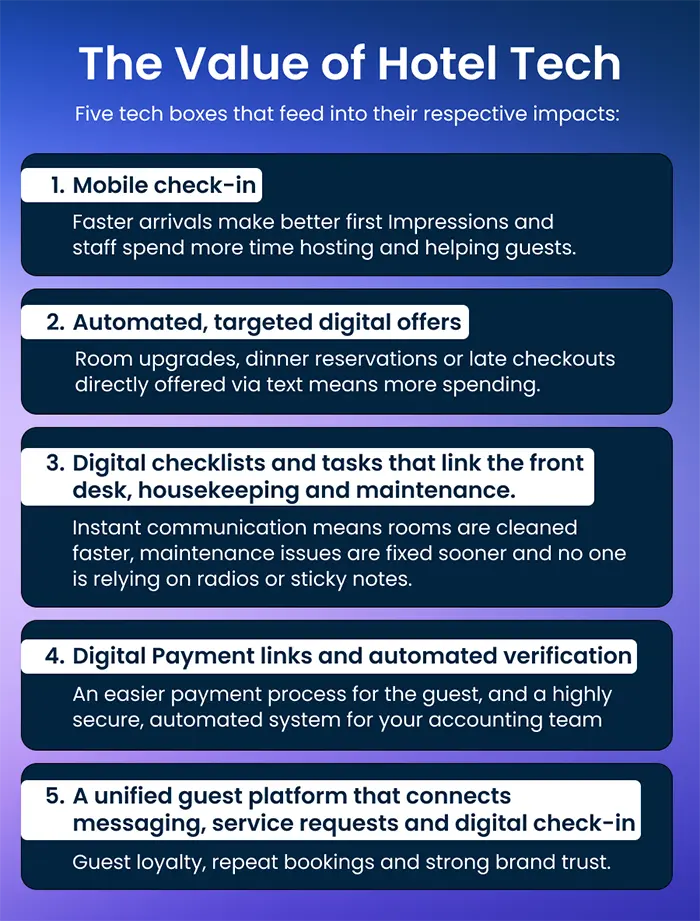
1. Faster, Lower-Friction Guest Arrival
Arrival sets the tone for the entire stay. When check-in requires long waits, paperwork or repeated steps, guests already check out in their minds before the experience begins. Modern smart hotel tech removes these bottlenecks with mobile check-in, digital registration and automated room readiness notifications.
Streamlined arrivals improve both guest satisfaction and operational efficiency. Front desk teams spend less time processing paperwork and more time assisting guests who need personalized service. It all flows better because you can provide:
Shorter wait times and fewer front desk queues
Reduced administrative workload for staff
Faster room access for guests after arrival
More time for staff to focus on high-value guest interactions
2. Increased In-Stay Spend Through Timely Engagement
Technology can communicate with guests at the exact moments when they’re most likely to purchase additional services. Instead of relying on static brochures or front-desk suggestions, these systems deliver personalized offers during the stay via mobile messaging and digital touchpoints.
Strong guest engagement transforms your interactions into revenue opportunities. When guests receive timely offers for upgrades, dining, spa services or late checkout, they’re more likely to spend during their stay. Tech-powered upselling includes:
Targeted upsell offers delivered at the right time
Personalized recommendations based on guest preferences
Higher conversion rates on ancillary services
Increased average revenue per guest stay
3. Reduced Operational Drag That Protects Margins
Hospitality technology solutions reduce operational drag by bringing everything online (and connecting it across departments). Free from unnecessary manual work, your teams operate more efficiently and staff gain time to focus on guest-facing activities that strengthen the overall experience. HotelTechReport found that 89% of hotel operators save between 2 and 10+ hours per week by using a modern, integrated PMS, with nearly 1 in 5 saving over 500 hours annually.
These operational improvements often include:
Fewer manual data entry tasks across systems
Faster communication between departments
Improved visibility into operational performance
Reduced staffing pressure during peak periods
4. More Secure Payments and Fewer Chargebacks
The hospitality industry faces the highest average chargeback value of any sector. When factoring in processing fees, lost revenue and labor, operators face total costs of around $450 per chargeback dispute, according to a recent report by MasterCard. This is because traditional credit card handling and paper authorization forms increase the risk of fraud.
Digital payment systems and digital authorizations protect hotels by securely verifying transactions while simplifying the payment experience for guests. Secure digital authorizations result in:
Stronger fraud prevention and payment security
Reduced chargebacks and dispute resolution costs
Faster authorization and payment processing
Improved compliance with payment security standards
5. Consistent Guest Experiences That Drive Repeat Revenue
Consistency plays a major role in guest loyalty. When experiences vary widely between stays, guests lose confidence in the brand. Technology standardizes service by delivering timely communication, consistent information and seamless service across every touchpoint.
A unified guest experience platform connects messaging, service requests, digital check-in and post-stay communication in one system, so guests get a smoother experience that encourages repeat stays. The long-term revenue benefits include:
Higher guest satisfaction and stronger reviews
Improved loyalty and repeat bookings
Consistent service delivery across properties
Stronger brand trust with travelers
How to Improve Hotel Revenue with Technology: Choosing the Right Solutions
Understanding the impact of technology on hotel workflows is only the first step. The next challenge is choosing the right systems to support those workflows.
You need a strategy to improve revenue with technology, not just more platforms. Focus on tools that connect operations, guest engagement and payments into one cohesive ecosystem. Hotel operations software should simplify workflows, remove friction in the guest journey and unlock measurable revenue opportunities across the stay.
Phase 1: Define Your Needs
Before you sit through software demos or compare feature lists, take a hard look at your own operations. The best tech upgrades start with knowing exactly what’s currently slowing your team down.
Walk through every step of your day, from taking a reservation to swiping a credit card at checkout. Once you pinpoint exactly where your staff gets stuck, you’ll know which tools will save time and make you money. Here’s how to start:
Map out your daily routine: Track everything from the moment a guest books to when they leave a review. Seeing exactly how info gets passed around your hotel highlights the gaps where software can step in to save time and find hidden profit.
Check your booking flow: Look closely at how your rates and room availability interact across systems. Clunky inventory tools leave money on the table because you can't adjust prices fast enough or confidently fill every empty bed.
Find the headaches: Spot the moments that drag your team down or annoy your guests. Long lines at the desk, manual credit card checks and missed messages are huge red flags that the right tech can instantly fix.
Plan for growth: Pick tools that can scale with you. Whether you're adding more rooms or opening a new location, your software should be able to handle the expansion without forcing you to rip everything out and start over from scratch.
Separate the back office from the front lines: Know the difference between the system that runs the building (your PMS) and the tools that talk to the guest. Keeping your admin tasks separate from your guest-facing apps keeps your setup clean and stops you from paying for overlapping capabilities.
Phase 2: Understanding Revenue-Boosting Features
Once you know exactly where your operations need help, it’s time to look for tools that actually put money in the bank. A lot of hotel software just handles the boring back-office paperwork, but the best tech actively encourages guests to spend more while giving them a better trip.
The real money-makers play nice with your current setup and make life easier for the traveler. If a system makes it simple for a guest to text the front desk, pay a bill or buy a room upgrade right from their phone, it can quickly pay for itself. Here are some common revenue boosters:
Digital Check-In and Pre-Arrival Workflows: Mobile check-in, digital registration and automated pre-arrival communication cut down front desk congestion while making room for promotions, early check-in options and other revenue-generating services.
Secure Payment Capabilities: Integrated digital payment tools streamline authorization, reduce manual card handling and protect hotels from fraud while improving the checkout experience and reducing administrative overhead for finance teams.
Mobile Upsells and Upgrade Functionality: Automated upsell systems present room upgrades, amenities and service add-ons to guests at key moments, significantly increasing ancillary revenue.
Guest Messaging and In-Stay Engagement: Real-time messaging platforms connect guests with hotel teams instantly while enabling personalized recommendations for dining, spa services and local experiences that increase in-stay spending.
Fraud Prevention and Chargeback Reduction: Secure digital payment workflows verify transactions and store authorization records automatically, protecting revenue by reducing disputes, fraudulent bookings and costly chargeback claims.
Phase 3: Evaluating Operational and Business Criteria
Once you’ve identified the workflows and features that matter most, you need to size up potential technology solutions against clear business criteria. Hotels should prioritize systems that integrate seamlessly with existing infrastructure, deliver measurable value quickly and improve both staff productivity and the guest experience.
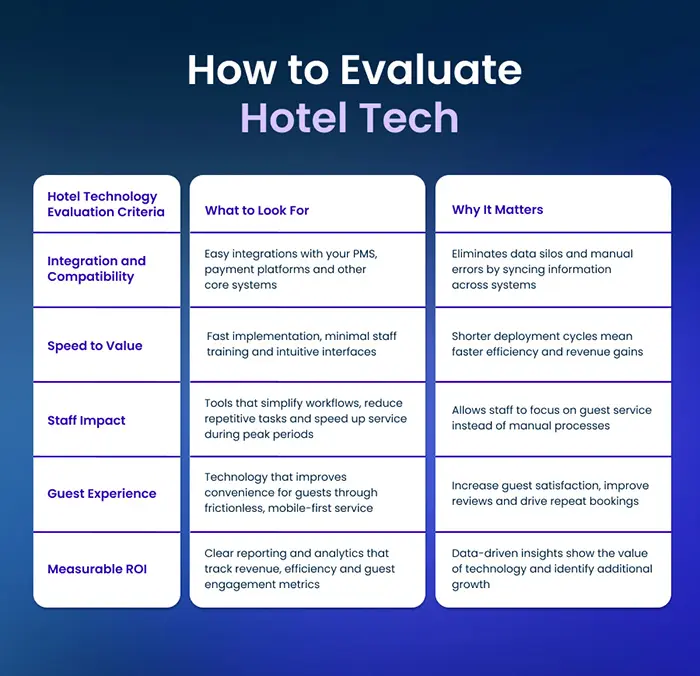
The following evaluation framework highlights the operational and financial factors hotel leaders should consider when selecting new technology.
Hotel Technology Evaluation Criteria
What to Look For
Why It Matters
Integration and Compatibility
Easy integrations with your PMS, payment platforms and other core systems
Eliminates data silos and manual errors by syncing information across systems
Speed to Value
Fast implementation, minimal staff training and intuitive interfaces
Shorter deployment cycles mean faster efficiency and revenue gains
Staff Impact
Tools that simplify workflows, reduce repetitive tasks and speed up service during peak periods
Allows staff to focus on guest service instead of manual processes
Technology that improves convenience for guests through frictionless, mobile-first service
Increase guest satisfaction, improve reviews and drive repeat bookings
Measurable ROI
Clear reporting and analytics that track revenue, efficiency and guest engagement metrics
Data-driven insights show the value of technology and identify additional growth
Enhance Guest Management and Revenue with Hotel Technologies from Canary
With such great technological advances in the hospitality industry, you can actively improve the guest journey while increasing revenue. A purpose-built guest management system (GMS), for example, transforms everyday guest interactions into opportunities to streamline service, increase spending and strengthen loyalty.
Canary’s GMS stands out as the industry leader in digital guest engagement technology. Built specifically for hospitality, Canary digitizes the guest journey from discovery through post-checkout while simplifying operations for hotel teams. The result is a smoother experience for guests and measurable revenue growth for hotels. Its key capabilities include:
Mobile Check-In: Reduce front desk congestion and accelerate guest arrivals with digital registration and mobile check-in workflows that eliminate paperwork and long lines.
Dynamic Upsells: Present personalized room upgrades, amenities and service add-ons before arrival and during the stay to increase ancillary revenue and maximize the value of each reservation.
Guest Messaging: Communicate with guests instantly through mobile messaging, respond to service requests faster and deliver timely recommendations that increase in-stay engagement.
Smart Checkout: Simplify departures with mobile checkout, automated folio delivery and late checkout offers that improve convenience while capturing additional revenue.
Digital Authorizations: Securely process credit card authorizations through digital workflows that reduce fraud risk, eliminate paper forms and protect hotels from costly chargebacks.
Canary AI: Automate guest communication, streamline operations and provide intelligent responses to guest inquiries while maintaining a personalized guest experience.
Book a demo today and see how Canary's hotel technology can turn guest management into a revenue-driving advantage.
Frequently Asked Questions
How Does Technology Improve Hotel Operations?
Hotel technology improves operations by digitizing manual workflows and connecting departments through integrated systems. Tasks that once required paperwork, manual data entry or in-person coordination move into streamlined digital processes.
Operational improvements typically include:
Automated check-in and checkout processes that reduce front desk workload
Integrated communication tools that improve coordination between teams
Centralized reporting that gives managers real-time visibility into performance
Fewer repetitive administrative tasks for staff
Do I need to replace my PMS to modernize my hotel technology stack?
In most cases, no. Hotels usually modernize their technology stack by integrating new systems with their existing property management system rather than replacing it entirely.
Many modern hotel technologies integrate directly with PMS platforms through APIs. This allows hotels to add capabilities like mobile check-in, digital payments, guest messaging and upselling tools without disrupting core operational systems.
How do guest-facing hotel technologies influence repeat bookings and loyalty?
Guest-facing technology improves loyalty by creating smoother, more personalized guest experiences. When interactions feel effortless and responsive, guests are more likely to return.
Digital tools influence loyalty in several ways:
Mobile check-in and checkout reduce friction during arrivals and departures
Fast messaging improves response times for guest requests
Consistent communication builds trust and brand reliability
How long does it take to see ROI from technology in hotels?
The timeline for return on investment depends on the type of technology implemented. Operational efficiency tools may produce measurable impact within weeks, while larger infrastructure upgrades may take several months.
Revenue-focused systems often deliver faster ROI because they generate incremental revenue opportunities during each guest's stay.





.avif)