A term that sounded futuristic to most hotels just a decade ago? Total Revenue Management (TRM). Sure, it drew a crowd at conferences, but it was seemingly impossible to execute. It remained an idea for most. But as technology developed and it became a real possibility, hotels found themselves chasing the sweet spot between maximum occupancy and maximum upsells.
Today, TRM is gaining traction as a holistic approach that drives profitability by factoring in all revenue streams. TRM is becoming a reality, so let’s review what it is, how AI fits in and what strategies you can apply to implement it in your location.
Key Highlights
Total revenue management for hotels is a strategy that optimizes revenue across all departments (not just rooms).
The combination of AI and real-time data unlocks deeper guest insights, fueling smarter revenue decisions.
Canary gives hotels a single platform to digitize operations, uncover new revenue streams and drive profitability.
What Is Total Revenue Management (TRM)?
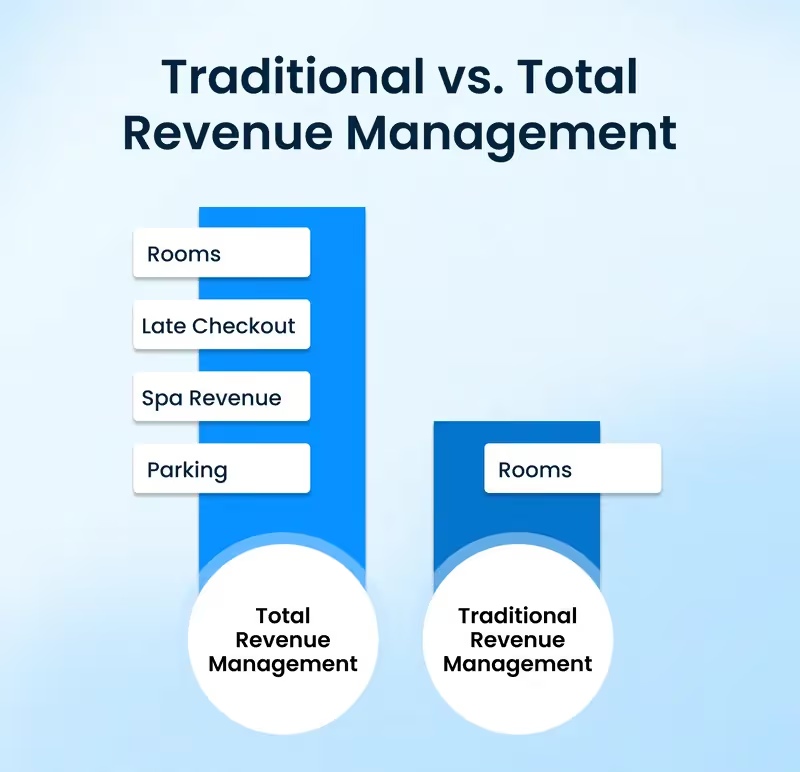
Total revenue management (TRM) refers to the strategy of optimizing revenue from every hotel department — not just rooms. If traditional revenue management is about fine-tuning a single violinist, TRM brings the entire orchestra into harmony.
Traditional revenue management focuses narrowly on room revenue. Conversely, TRM accounts for all guest spending. This includes the room rate, F&B, spa, parking, experiences, in-stay upgrades and more.
Revenue Management Systems (RMS) paved the way for TRM by taking on much of the heavy analytical workload needed to execute this. However, early attempts were data-intensive and difficult for the average hotel. Today, that’s no longer the case. Hotels increasingly recognize the value of multiple revenue streams and the need to orchestrate them in sync — and technology has stepped up to help.
But to evaluate success with TRM, metrics are a must. Measuring things like Total Revenue per Available Room (TRevPAR) or Revenue per Available Guest (RevPAG) let hotel teams understand their unique revenue tipping points across the entire guest journey (and make adjustments accordingly).
Why Total Hotel Revenue Management Matters
A room-only revenue strategy was once the standard. Now we know it leaves money on the table. With rising costs and evolving guest expectations, hotels can’t afford to treat ancillary revenue as an afterthought. It needs to be managed with intention.
Fortunately, it’s no longer terribly complicated. TRM isn’t about proving you can juggle more data; it’s about designing a cohesive, profitable guest journey that replaces a handful of disconnected departments. Here’s why TRM matters.
Rising Costs and Declining RevPAR
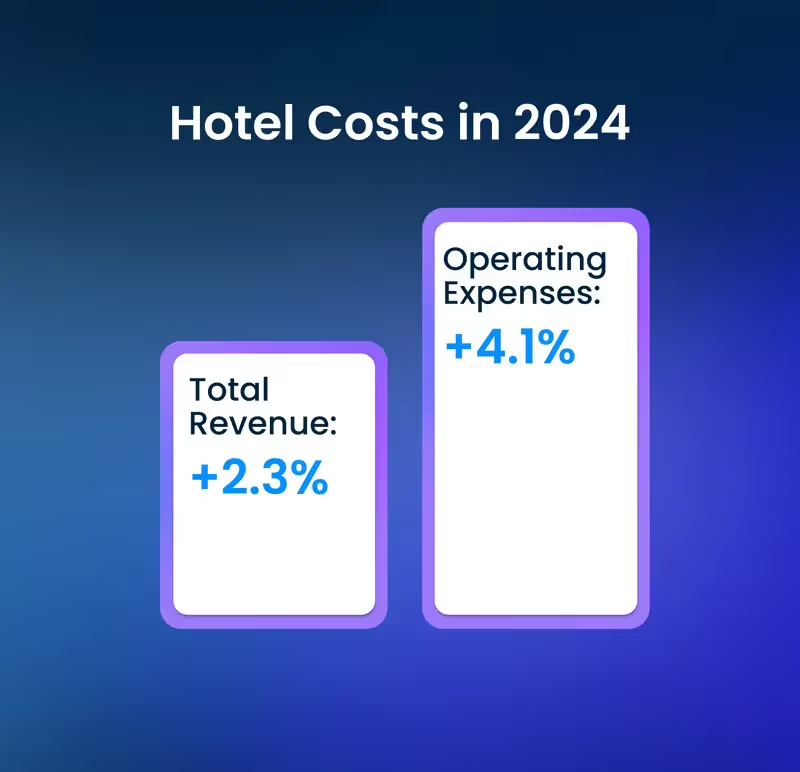
Hotel operating costs have climbed significantly: in 2024, total revenue grew by 2.3%. Simultaneously, expenses grew by 4.1%. Given the macroeconomic environment, it’s safe to assume a continuation of this trend in 2025 — especially because the national-level RevPAR forecast for 2025 is now declining by -0.4%. This combination of factors limits the effectiveness of traditional room pricing levers.
In this environment, total revenue management is a must. It lets hotels recoup margins and profitability without raising room rates or cutting offerings. Instead, hotels focus on strategically expanding services, which is ideal for the bottom line and the guest experience.
Room revenue accounts for only 60–70% of a hotel’s total income.
With the right technology, ancillary revenue sources can quickly and exponentially grow (like in this hotel that saw a tenfold increase in upsells).
Guest Expectations for Personalization
Preference personalization is a basic expectation of today’s guests, who are used to controlling everything from perfectly timed grocery pick-ups to coffee orders from their phone. This shift allows hotels to increase hotel revenue across an increasing number of touchpoints.
And you don’t have to take guesses at what to offer. TRM leverages guest data to surface the opportunities that drive the most financial return. Teams can then tailor promotions, improving satisfaction and revenue. Whether it’s a late checkout, welcome amenity or spa access, personalization increases perceived value and encourages higher spend.
With a total view of guest behavior, hotels can proactively design high-satisfaction, high-value journeys.
Competitive Advantage Through TRM
Hotels that adopt TRM gain a major edge over competitors that are still scrambling for margins in one dimension (rooms). A unified approach:
Increases revenue per guest
Builds stronger brand loyalty
Drives more efficient operations
Powers better long-term forecasting
By aligning departments around a shared revenue goal and investing in smart tools, hotels unlock growth beyond the four walls of a guest room.
Why it matters:
TRM boosts profitability by aligning revenue strategies across departments.
AI-powered tools surface guest patterns and automate recommendations.
Key Components of an Effective Hotel Total Revenue Management Strategy
Total revenue management works best when the right infrastructure, processes and mindset support it. Below are six foundational elements that drive successful TRM adoption.
Unified Data and Analytics Across Departments
When data from departments like F&B, spa, retail and front office live in silos, it’s impossible to understand the total value of a guest. Unified data platforms connect these sources to build one holistic revenue profile.
Why it matters: When you track complete spending patterns, you can tailor offers and forecast demand more accurately.
Example: A resort that tracks spa bookings alongside room type sees that suite guests book massages 40% more often. They start promoting spa bundles, which include a massage and an additional treatment, to suite guests pre-arrival.
Cross-Department Collaboration Frameworks
Total revenue management requires buy-in from every department. Teams need shared goals, KPIs and regular communication to ensure efforts aren’t duplicated.
Why it matters: Collaboration ensures pricing, promotions and service delivery are aligned to maximize total guest value over individual department metrics.
Example: At a conference hotel with a spa, daytime conference activities likely leave the spa quiet. Sales and operations align to solve the problem. During conferences, the hotel now runs a limited-time promotion to attract external day-spa reservations to keep services booked.
Forecasting for Available Services
With TRM, hotels forecast usage fluctuations for all revenue-generating services. This makes it possible to optimize staffing, pricing and inventory across operations.
Why it matters: Accurate forecasts improve resource allocation and reduce lost revenue from underutilized services or overstaffing.
Example: A wellness hotel uses historical data to predict peak demand for their vegan food outlet during yoga retreats. They use this data to adjust staffing levels and weekly orders accordingly, while adding a yoga-themed tea promotion for after class.
Dynamic Pricing Beyond Room Rates
By adjusting prices for amenities and services based on demand, time of day, or booking behavior, hotels generate higher margins and capture more value from each guest.
Why it matters: Dynamic pricing lets hotels increase yield from high-demand services and improve profitability across all guest touchpoints.
Example: A beachfront hotel prices poolside cabana rentals higher during holidays and weekends, and lowers them midweek to maintain steady bookings.
Upselling and Cross-Selling Based on Guest Data
Upsells and cross-sells shouldn’t be pushy or overwhelming. They work best when they’re timely, relevant and tailored. Technology makes surfacing the right offers at the right moment easier than ever. It processes guest behavior and booking history, while you connect with the human.
Why it matters: Personalized hotel upsells increase conversion rates, boost revenue and enhance the guest experience by offering meaningful options.
Example: A property identifies that guests booking premium rooms are more likely to add late checkout. It’s added as an upsell during the Mobile Check-In flow for premium rooms for a 3x increase in uptake.
Staff Training and Incentives for TRM Success
Technology can open the door to TRM, but people are the ones who have to walk through it. Staff are the bridge guiding guests toward the tools that help them explore services, book experiences and get more out of their stay.
Why it matters: Empowered and informed staff that understand TRM and are rewarded for supporting total guest revenue naturally point guests to the digital compendium, mobile requests and on-property services in a way that feels helpful (not salesy).
Example: A hotel trains its team to show guests, in one sentence, how to find the digital compendium on their phone. When total guest revenue for the month meets a shared target, every team member receives a flat bonus to reward the behavior, not the pitch.
Role of AI in a Total Revenue Management Strategy in the Hospitality Industry
Artificial intelligence is transforming how hotels approach total revenue management by providing and incorporating insights across the guest journey. With AI, hotels can analyze data to make proactive decisions, leveraging multiple relevant data points.
AI Applications for Hotels
How These AI Use Cases Impact Total Revenue Management for Hotels
Forecasting and Demand Prediction
AI analyzes historical trends and real-time data to forecast demand for all services, enabling better staffing and targeted promotional decisions.
Pricing
Intelligent pricing engines adjust rates for rooms, amenities and personalizations based on real-time demand signals.
Personalization and Upselling
AI identifies guest preferences from previous stays, booking behaviors and demographics to serve personalized upsells that increase ancillary revenue and guest satisfaction.
Operational Efficiency
Automating tasks like check-in, messaging and payment processing improves service speed, letting teams focus on more engagement opportunities.
Reputation and Review Analysis
AI tools scan reviews and surveys to uncover service gaps or strengths. Insights are used to improve experiences, which drives higher spend and retention.
Benefits of Total Customized Revenue Management for Hotels
Yes, we’ve already made the case for TRM! But here’s the quick cheat sheet your slide deck will thank you for.
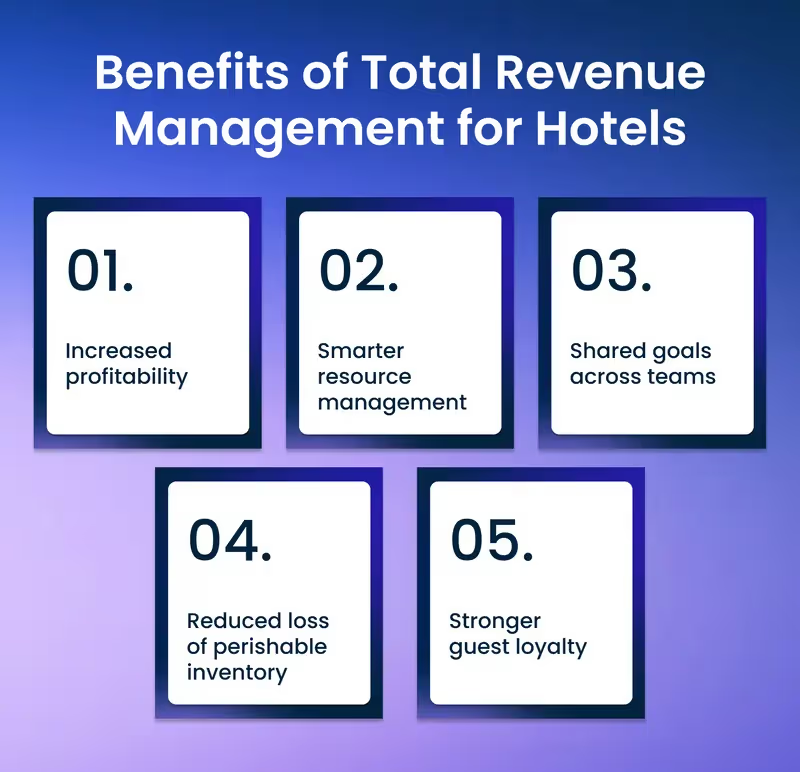
Increased profitability across all outlets: TRM boosts total spend per guest by surfacing revenue opportunities throughout the stay.
Smarter cost and resource management: With clearer demand forecasts across every department, hotels can right-size staffing, inventory and expenses with far less waste.
Cohesive workforce with shared KPIs: Focused on total guest value, shared KPIs create cross-department visibility, collaboration and accountability.
Optimized use of perishable assets: With more clearly targeted offers, fewer unbooked services and resources go to waste.
Stronger guest loyalty through personalization: By tailoring experiences and anticipating needs, hotels deliver more meaningful stays and increase lifetime value.
Strategies for Implementing TRM to Maximize Hotel Profitability
TRM is about fine-tuning revenue to your individual property. Adopting it means aligning people, processes and platforms around one goal: growing profitable revenue across your entire guest journey. These are the strategies that move TRM from theoretical to operational.
1. Shift from RevPAR to TRevPAR Mindset
Total revenue management starts by expanding your definition of success. RevPAR is still useful in the context of rooms and benchmarking, but transitioning to metrics like Total Revenue per Available Room (TRevPAR) or Revenue per Available Guest (RevPAG) allows you to evaluate performance based on full guest value.
This mindset shift encourages teams to think beyond occupancy and nightly rates to start prioritizing ancillary revenue.
Key steps:
Add TRevPAR and RevPAG to your performance dashboards
Evaluate data to understand non-room revenue patterns
Set new goals tied to total guest value, not just rooms
2. Train and Incentivize Staff Across All Departments
Your TRM strategy is only as strong as the team behind it. Staff need to understand how their roles impact total revenue and be equipped to act on it. Regular training and performance-based incentives tied to TRM goals turn every employee into a stakeholder of your revenue strategy.
Key steps:
Conduct TRM onboarding for all departments
Share real examples of how actions impact revenue in daily standups
Offer bonuses or recognition tied to ancillary revenue growth
3. Break Down Silos With Cross-Department Collaboration
With TRM, revenue generation is everyone’s job — even the team fixing QR codes in elevators. Build straightforward interdepartmental communication and align KPIs across teams.
In Cornell’s CHR Total Hotel Revenue Management report, major hotel chains highlighted how cross‑department coordination and mobile‑driven initiatives unlock cross-sell opportunities that wouldn’t exist in siloed environments.
Key steps:
Host monthly revenue strategy meetings with department heads
Align marketing and promotions across outlets
Set shared KPIs like total guest spend or TRevPAR growth
4. Invest in Integrated RMS and Business Intelligence Tools
To guide your attention where it needs to be, total revenue management requires real-time data and automated insights. Investing in integrated hotel revenue management software and business intelligence platforms ensures you have the visibility to act on opportunities as they arise.
Choose tools that pull data from all hotel departments and offer forecasting, segmentation and performance analytics.
Key steps:
Prioritize platforms that integrate data from each department
Look for AI-powered forecasting and upsell recommendations
Use dashboards to track TRM KPIs
5. Monitor Key Performance Indicators Regularly
TRM requires active monitoring, which involves spotting meaningful trends and acting on the information. Regularly reviewing KPIs helps you detect signals and uncover new opportunities to improve guest revenue.
To bring TRM into the everyday, consider making KPIs accessible to every department.
Key metrics:
TRevPAR, RevPAG and average ancillary spend per guest
Upsell conversion rates and promotion performance
Revenue contribution percentage by department
6. Customize Your Strategy by Property Size and Market Segment
The right TRM strategy will vary based on your property’s size, type, guest mix and market segment. For example, luxury resorts have different ancillary revenue opportunities than an airport hotel (coffee and grab & go breakfast with timed pick-up, anyone?).
The key is to start where you are. Focus on the highest-impact revenue areas first, and scale as you grow.
Key steps:
Identify non-room revenue generators by segment
Focus on digital upsells and smart pricing
Consider new packages you can add with existing resources
Enhance and Manage Your TRM with Canary
One thing is clear: total revenue management only works when your tools keep up with your strategy — and that’s where Canary stands out. Canary’s AI-powered Guest Management System gives you the automation and personalization needed to boost revenue across every department. With centralized data and smart upsell capabilities, Canary empowers your team to act on insights.
With Canary, you can:
Unify guest data for deeper insights
Personalize upsell offers in real time
Streamline operations across departments
Boost revenue through automation and smarter workflows
Book a demo today and see how AI-powered tools from Canary support total revenue management for hotels and maximize profitability.
Frequently Asked Questions
Why do some hotels fail to move from siloed revenue management to total revenue management?
Many hotels struggle to adopt total revenue management because of internal silos caused by fragmented data and outdated tech. Without leadership support and integrated tools, cross-department collaboration becomes difficult.
The solution is twofold: implement integrated systems that centralize data across the guest journey and secure leadership buy-in. When everyone’s working toward total guest value, TRM becomes much easier to execute.
What KPIs best show TRM impact beyond RevPAR and GOPPAR?
To evaluate the full impact of TRM, hotels need to look beyond RevPAR and GOPPAR to key performance indicators like TRevPAR, RevPASH, RevPATH and CLV.
These KPIs give hoteliers the insights they need to improve both profitability and guest experience. Use them to set benchmarks, identify high-performing segments, and fine-tune pricing.
KPI
Definition
TRevPAR
Total Revenue per Available Room; includes all revenue, not just rooms
RevPASH
Revenue per Available Seat Hour; used in restaurants or F&B outlets
RevPATH
Revenue per Available Treatment Hour; used in spas and wellness services
CLV
Customer Lifetime Value; total expected revenue from a single guest over time
Conversion Rate
Percentage of guests who accept upsells, cross-sells or targeted offers
What role do online review scores play in measuring long-term TRM impact?
Online review scores reflect how well your hotel delivers on guest experience management, so they’re a powerful indicator of TRM effectiveness. When hotels use TRM to increase guest satisfaction through their complete offering, good reviews follow.
According to a Cornell Hospitality study, a 1-point increase in a hotel’s average online rating can allow for a 0.89% increase in average daily rate (ADR) without sacrificing occupancy. That means better experiences not only boost loyalty and referrals, but also justify room pricing.
Should TRM be tailored to different property types?
Yes, TRM strategies must be tailored based on property type because the total revenue opportunity differs based on the local market, amenities and other factors.
The key is customizing TRM to the highest-impact opportunities for each property's unique guest profile and revenue streams.